




















Google AI Studio vs Grok API: New Models and Prices (October 2026)
[IMAGE 1 — Hero: two stylized price tags side by side over a dark grid background (original illustration). Suggested search: “price tags comparison abstract tech” on Unsplash. Alt text: “Comparing Google AI Studio and Grok API prices”]
If you build with AI APIs, or just want to know what the big labs are charging, October 2026 brought a lot to track. Google’s Gemini API (the one behind AI Studio) added Gemini 4 Argon as a generally available model and published new price schedules, including increases that start in December and January. xAI’s Grok API added Grok 4.7 in September and refreshed its voice models in October.
This guide pulls the details from the official pages, shows the per-million-token prices side by side, and works out what a sample workload would cost. All prices are in US dollars per one million tokens unless stated otherwise, and everything can change, so confirm on the official pricing pages before you commit.
How I sourced this: the Gemini figures come from Google’s pricing page and changelog. The Grok figures come from xAI’s models page and release notes. Where those two xAI pages differ, I say so. Cost examples are my own arithmetic from the listed prices, not figures from either company.
Quick Summary
- Gemini 4 Argon reached general availability on October 13. It has no free tier, and its price doubles on December 1.
- Gemini 3.8 Flash and 3.6 Flash are free to try and double in price on January 1, 2027.
- Grok 4.7 launched September 21 with a 500k-token context window and a two-tier price (cheaper under 200k prompt tokens, double above).
- Grok voice 3.0 launched October 14 at the same price as voice 2.0.
- Retirements: a Grok image model retires on November 2, and Google already shut down an older Deep Research preview on October 23.
Google AI Studio and the Gemini API
What is new
Google’s changelog lists these recent launches:
| Date | Model | What it is |
|---|---|---|
| Oct 13 | Gemini 4 Argon (gemini-4-argon) |
Flagship model for complex coding, agents, math and science, now generally available |
| Oct 6 | Gemini Nano Banana 2.1 | Image model with better visual quality and wider aspect-ratio support, now generally available |
| Sep 22 | Gemini 3.8 Flash TTS and Flash-Lite TTS | Text-to-speech, with voice design, voice replication and an extended voice library |
| Sep 15 | Gemini 3.8 Live | Real-time audio models, including an extended-thinking version |
| Sep 3 | Lyria 3.5 | Full-length song generation |
| Sep 2 | Gemini 3.8 Flash | Fast general model, now generally available |
| Sep 1 | Agentic video understanding | Added to Gemini 3.7 Flash, 3.6 Flash and 3.5 Flash-Lite |
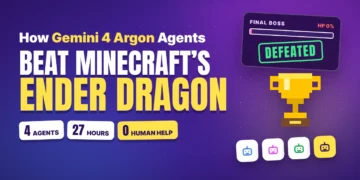
For a deeper look at what Argon can do, see our report on how Argon agents beat Minecraft’s Ender Dragon.
Gemini 4 Argon at a glance
Google’s model page describes Argon as its flagship reasoning model. It has a context window of 1,048,576 tokens, shared by input and output, and a default output limit of 65,536 tokens (up to 1,048,576 with long decoding). It accepts text, images, video, audio and PDFs, and it outputs text only. It supports code execution, function calling, structured output, search grounding and adjustable thinking levels, and it does not support image generation or the Live API.
Gemini API prices
From the official pricing page, paid tier, Standard, per million tokens:
| Model | Free tier | Input | Output |
|---|---|---|---|
| Gemini 4 Argon | Not available | $2.00 through Nov 30, 2026; $4.00 from Dec 1 | $10.00; $20.00 from Dec 1 |
| Gemini 3.8 Flash | Free of charge | $0.75 through Dec 31, 2026; $1.50 from Jan 1, 2027 | $3.75; $7.50 from Jan 1, 2027 |
| Gemini 3.6 Flash | Free of charge | $0.75 through Dec 31, 2026; $1.50 from Jan 1, 2027 | $3.75; $7.50 from Jan 1, 2027 |
| Gemini 3.5 Flash-Lite | Free of charge | $0.30 (text, image, video, audio) | $2.50 |
| Gemini 3.1 Flash-Lite | Free of charge | $0.25 (text, image, video); $0.50 audio | $1.50 |
| Gemini 3.1 Pro Preview | Not available | $2.00 up to 200k tokens; $4.00 above | $12.00 up to 200k; $18.00 above |
| Gemini 3 Flash Preview | Free of charge | $0.50 (text, image, video); $1.00 audio | $3.00 |
Batch, Flex and Priority modes change the price. For Argon, Batch and Flex are listed at $1.00 input and $5.00 output through November 30 (then $2.00 and $10.00), and Priority at $3.60 input and $18.00 output through November 30 (then $7.20 and $36.00). Batch and Flex are the cheaper way to run work that does not need an instant answer.
Two limits on my reading. The pricing page is very long and my tool read about 100,000 of its 127,000 characters, so models listed after Gemini 3 Flash Preview, along with image, video, speech and live models, are not covered here. And I did not read the free-tier rate limits, so check how many requests per minute and per day the free tier allows before you plan around it.
The price increases to plan for
The key news for developers is not a new model but a schedule:
- Gemini 4 Argon: input and output prices double on December 1, 2026.
- Gemini 3.8 Flash and 3.6 Flash: input and output prices double on January 1, 2027.
The changelog does not list any pricing change for September or October. The increases are built into the pricing page itself as dated rows. Whether the earlier lower rates are an introductory offer is not stated on the pages I read, so I won’t call them that.
Other changes that can affect your project
- October 26: new paid-tier projects using the Generate Content endpoint store requests by default (
store=true). Existing projects keep their setting, and you can opt out. If you handle sensitive data, check this setting. - October 8:
gemini-3.7-flashandgemini-3.5-flashnow route automatically to newer models (3.8 Flash and 3.6 Flash). If your results changed, this may be why. - October 8:
deep-research-pro-preview-12-2025was deprecated and shut down on October 23. Migrate to a newer Deep Research agent. - October 6:
gemini-3.1-flash-imageis deprecated, with no shutdown date announced. - September 18: access to the 2.5 models is limited to users who used them recently. They are not deprecated.
The Grok API (xAI)
What is new
From xAI’s release notes:
| Date | Change |
|---|---|
| Sep 2 | grok-imagine-image-quality will retire on Nov 2, 2026, with requests routed to grok-imagine-image-2.0 at quality=low for a lower per-image price |
| Sep 17 | grok-voice-transcribe-2.0 is available and is the default for speech to text |
| Sep 21 | Grok 4.7 (grok-4.7) is available with a 500k context window and reasoning effort options up to xhigh |
| Sep 25 | New safety_identifier request field to attribute policy violations to individual end users |
| Oct 2 | grok-voice-transcribe-1.0 reaches end of life, routed to 2.0 at the same price |
| Oct 14 | grok-voice-3.0 is available for speech to speech at the same price as 2.0; grok-voice-2.0 is deprecated |
Grok 4.7 pricing
The release notes list Grok 4.7 at $2 input, $0.50 cached input and $6 output per million tokens for prompts below 200k tokens, and $4, $1 and $12 above that. xAI’s models page lists the same $2 input and $6 output as the headline price but shows a single row, without the cached price or the long-prompt tier. I rely on the release notes for the full schedule, since they spell out both tiers.
Grok 4.7 Fast is not on the public API. According to the release notes it is available only in Cursor and Grok Build, at twice the standard token rates.
The models page also says Grok 4.7 has a knowledge cutoff of May 2026, always returns encrypted reasoning content on the Responses API, and that logprobs and top_logprobs are silently ignored on grok-4.20 and newer models. Not every model accepts Batch API requests.
Voice, image and video
Per the models page:
- Speech to speech: $0.08 per minute.
- Text to speech: $15.00 per million characters.
- Speech to text: $0.10 per hour (batch) or $0.20 per hour (streaming).
- Image generation and editing: from $0.02 per image (1K and 2K).
- Video: from $0.02 per second (480p, 720p and 1080p).
The page names Grok Imagine Image 2.0 and Grok Imagine Video 1.5 but does not list their individual prices. If you use Grok to make video, our workflow guide on turning a script into an AI video covers the steps.
Side-by-Side: What a Sample Workload Costs
Here is a simple comparison using my own arithmetic from the listed Standard prices. The workload: 10 million input tokens and 2 million output tokens in a month, with no caching or batch discount. It is only an illustration; your real usage will differ.
| Model | Cost now | Cost after the scheduled increase |
|---|---|---|
| Gemini 4 Argon | $40.00 | $80.00 (from Dec 1) |
| Gemini 3.1 Pro Preview (≤200k prompts) | $44.00 | No change listed |
| Gemini 3.8 Flash | $15.00 | $30.00 (from Jan 1, 2027) |
| Gemini 3.5 Flash-Lite | $8.00 | No change listed |
| Gemini 3.1 Flash-Lite | $5.50 | No change listed |
| Grok 4.7 (prompts under 200k) | $32.00 | No change listed |
| Grok 4.7 (prompts over 200k) | $64.00 | No change listed |
How I got these: Argon is 10 × $2 + 2 × $10 = $40 now, and 10 × $4 + 2 × $20 = $80 after December 1. Grok 4.7 is 10 × $2 + 2 × $6 = $32 under 200k prompts and 10 × $4 + 2 × $12 = $64 above. The other rows follow the same method.
What stands out:
- Argon costs more than Grok 4.7 on this sample, and the gap widens in December. Argon’s input rate ($2) matches Grok’s, but its $10 output rate is above Grok’s $6, so the sample costs $40 versus $32 now, and $80 versus $32 after December 1 (while Grok’s long-prompt tier only applies above 200k tokens).
- Cheap Flash-Lite tiers are far below both. If your task is simple classification or extraction, the smaller Gemini models cost a fraction of the flagships.
- Context length matters for Grok. Long prompts double the rate.
- Price is not quality. This table says nothing about accuracy, speed or reliability. Test with your own prompts.
I also did not account for thinking tokens, which many reasoning models bill as output. Your real bill can be higher if you use high reasoning effort.
Free Tiers and How to Try Things
- Google AI Studio and the Gemini API: the pricing page marks several Flash and Flash-Lite models as free of charge, while Argon and 3.1 Pro Preview are not available on the free tier. I did not read the free-tier limits, so check them.
- Grok API: I did not find a free-tier or free-credit offer on the xAI pages I could read, so I can’t say whether one exists today. Check xAI’s console.
Who Should Care About What
Hobbyists and students. Stick to the free Gemini Flash models while they last, and be ready for pricing to double in 2027.
Small businesses with a chatbot. Use a Flash or Flash-Lite model for routine questions, and a flagship only for hard cases. Use Batch mode for anything that can wait.
Developers with production workloads. Budget for the December and January increases now, and review the store=true default if you handle personal data.
Voice and media builders. Note the Grok voice 3.0 switch (same price) and the November 2 image model retirement. Check which alias your code calls.
Common Mistakes to Avoid
Budgeting with today’s Argon price. It doubles on December 1.
Ignoring the long-prompt tier. Grok 4.7 and Gemini 3.1 Pro both cost more above 200k prompt tokens.
Forgetting aliases. grok-voice-latest and the rerouted Gemini names can change your model without a code change.
Comparing headline prices only. Check cached, batch and thinking-token rules.
Assuming free means unlimited. Free tiers have rate limits and can change.
Trusting third-party price pages. Aggregators lag. Use the vendors’ pages.
Frequently Asked Questions
Is Gemini 4 Argon free? No. Google’s pricing page says it is not available on the free tier.
When do Gemini prices go up? Argon on December 1, 2026; 3.8 Flash and 3.6 Flash on January 1, 2027, according to the pricing page.
What is Grok 4.7’s context window? 500k tokens, according to xAI’s release notes.
What does Grok 4.7 cost? $2 input and $6 output per million tokens under 200k prompt tokens; $4 and $12 above, per the release notes.
Is Grok 4.7 Fast available through the API? Not publicly. The release notes say it is only in Cursor and Grok Build, at twice the standard rates.
Which is cheaper, Gemini or Grok? It depends on the model and your mix of input and output. On the sample workload above, Grok 4.7 was cheaper than Argon, and the small Gemini models were cheaper than both.
Where do I confirm the prices? Google’s pricing page and xAI’s models page, linked below.
The Bottom Line
October’s big news for API users is a calendar: Gemini 4 Argon is out, but its price doubles on December 1, and the popular Flash models follow on January 1. Grok 4.7 sits at a lower flat rate under 200k prompts, but it doubles above that. Pick the smallest model that does the job, use batch modes for patient work, and recheck the pricing pages before every budget decision. Once I can read the pages I missed, such as the rest of Google’s price list and xAI’s free-credit terms, they would round out this comparison.